One of the biggest reasons buyers are still sitting on the sidelines is because they believe home prices are about to come down.
Some are waiting for a housing market crash, hoping they’ll get a better deal later. Others are worried they’ll buy a home now and watch its value drop. And honestly, no one wants to feel like they overpaid or bought right before prices fell.
But here’s the question worth asking:
What if the crash you’re waiting for isn’t actually coming?
That’s what the latest housing market data suggests.
Experts Are Not Calling for a Housing Market Crash
If you’ve spent any time online lately, you’ve probably seen posts claiming home prices are about to crash. And yes, some local real estate markets are seeing small price adjustments right now.
But that is not the same thing as a nationwide housing market crash.
While certain areas are experiencing price declines, data shows home prices are still rising in 71% of housing markets across the country.
The challenge is that negative real estate news often gets more attention. So buyers may hear more about the few markets seeing declines than the majority of markets where home prices are still increasing.
That’s why it’s important to look at what the experts are actually forecasting.
Home Prices Are Expected To Rise Over the Next 5 Years
According to the Home Price Expectations Survey from Fannie Mae, more than 100 economists, housing experts, and market analysts are asked where they believe home prices are headed based on current market conditions.
And despite today’s uncertainty, the experts largely agree on one thing:
They do not expect home prices to crash.
In fact, the average forecast shows home prices rising every year for the next five years. Not at the rapid pace seen during the pandemic housing boom, but at a more normal and sustainable rate.
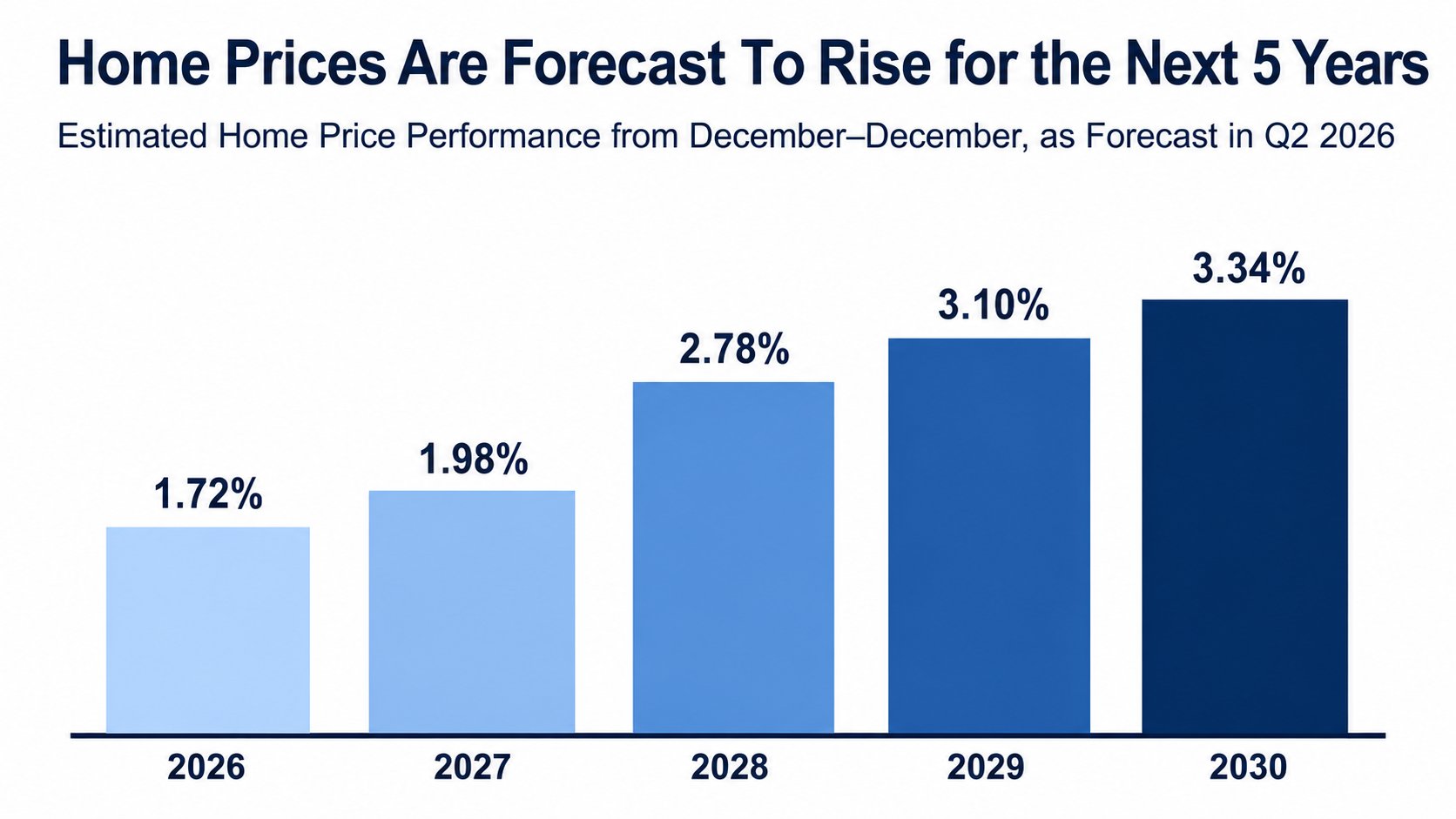
The main takeaway? Experts are not predicting a major drop in home values. They expect home prices to continue rising, just at a slower and more balanced pace.
Even the Pessimists Still Expect Prices To Rise
Just in case you’re thinking, “Of course experts would say that,” it’s worth noting that the survey includes both optimistic and pessimistic outlooks.
Researchers broke the panel into groups based on how confident they were about the housing market. Even the most pessimistic group still expects home prices to increase over the next five years.
Optimists expect average annual home price growth of about 4%. Pessimists expect growth closer to 1%. The overall average lands somewhere in the middle.
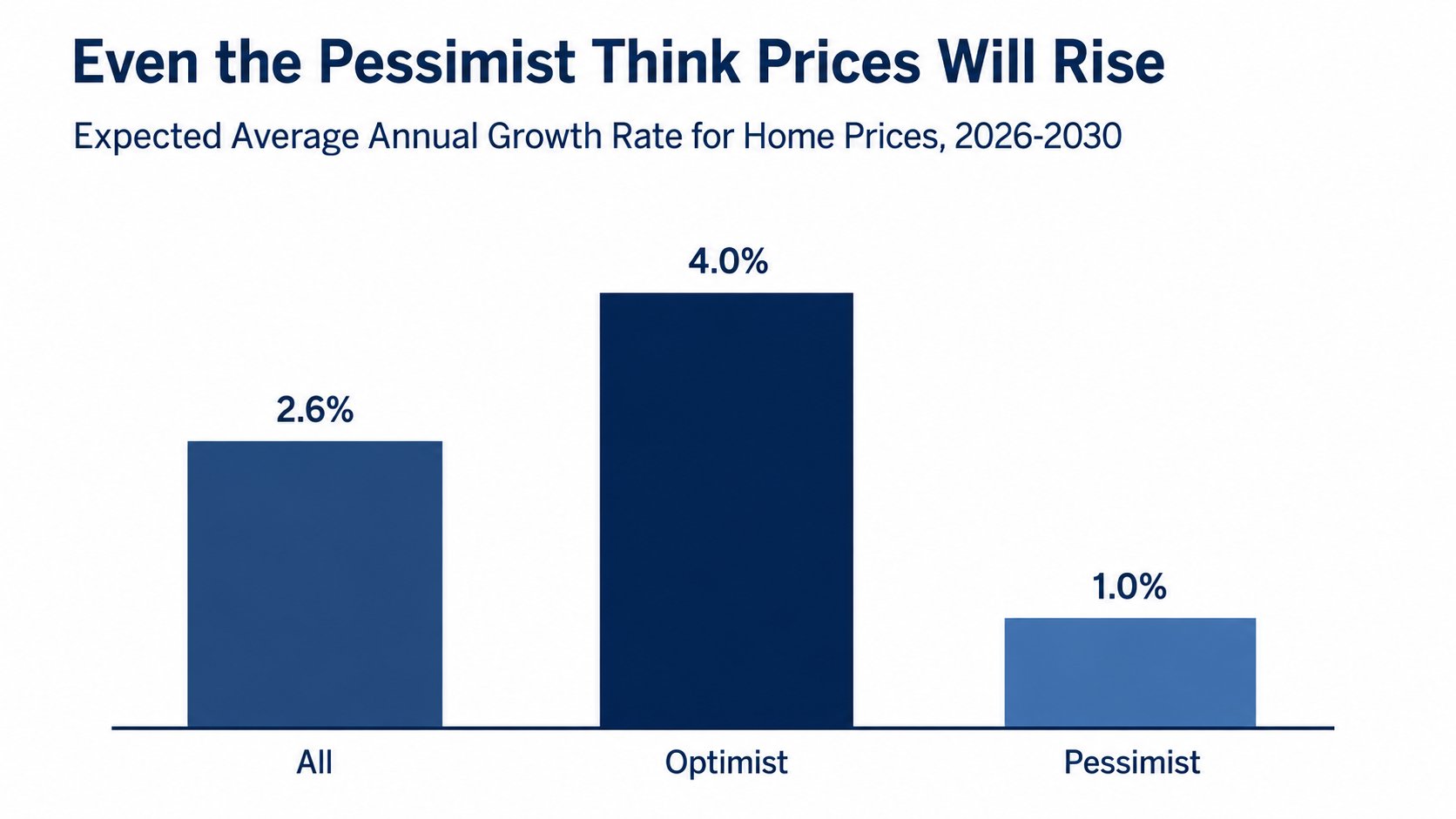
Think about that for a second. The debate among housing experts is not whether home prices will crash. It’s how much they will rise.
That’s a very different conversation from what many buyers are seeing on social media.
Waiting Could Cost You More Than You Think
If you’re waiting for home prices to fall before buying, you may end up disappointed. According to the latest home price forecast, a widespread housing crash is not what experts expect.
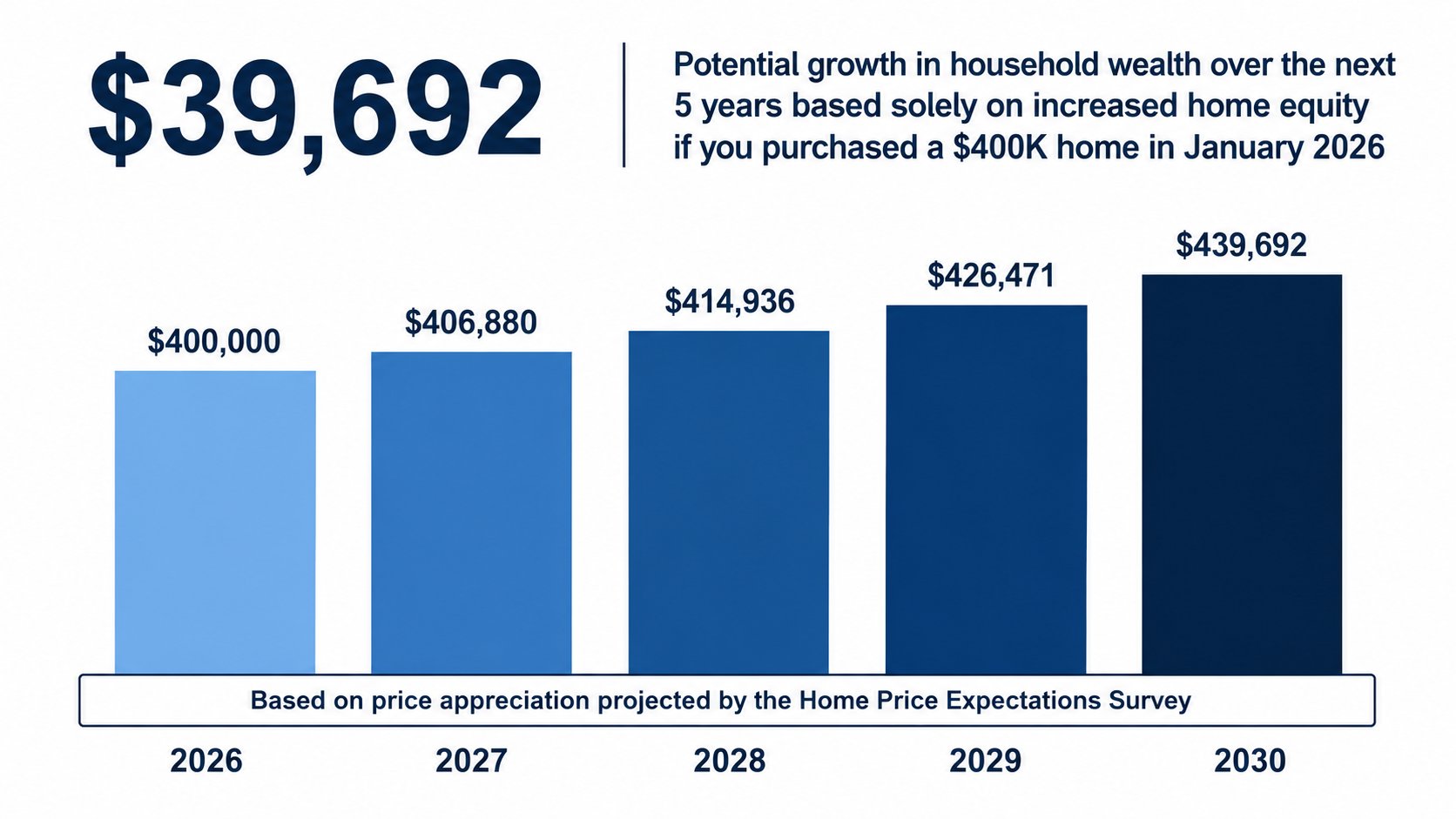
In fact, based on the Home Price Expectations Survey, someone who purchased a $400,000 home in January 2026 could gain nearly $40,000 in household wealth over the next five years from home equity growth alone.
Of course, every local real estate market is different. Home price trends can vary by city, neighborhood, inventory levels, interest rates, and buyer demand.
But on a national level, the data points to continued appreciation, not a crash.
That means the bigger risk may not be buying before prices fall. It may be waiting for a housing market crash that never happens.
Depending on your local market, waiting could mean missing out on equity growth or paying more for the same type of home later.
Bottom Line
A lot of buyers are waiting because they believe home prices will drop. But that’s not what housing experts are forecasting.
Home prices are expected to keep rising over the next five years, just at a more moderate pace.
If you’re wondering whether it still makes sense to wait, connect with a local real estate agent. They can help you understand your local housing market, current home price trends, and what waiting could mean for your buying power.